
Tesla’s Great Reset: Why the Company You Knew is Gone Forever
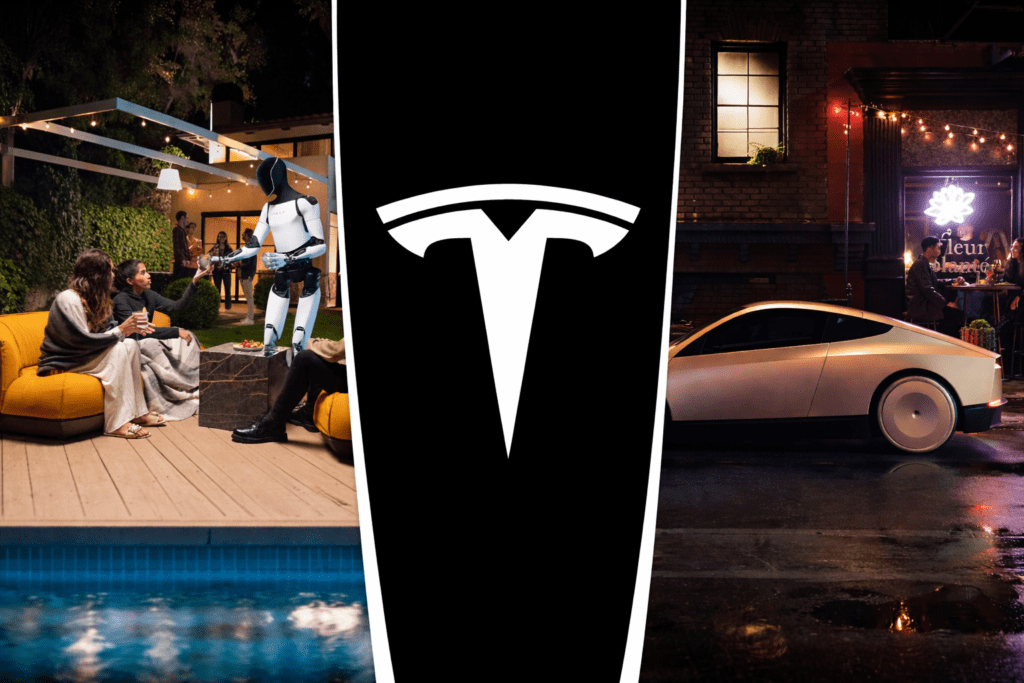
TL;DR FAQ: What is Tesla’s 2026 Great Reset and Why Did They Stop Making the Model S and X?
▼ Q: What is Tesla’s “Great Reset” in 2026?
A: Tesla is pivoting from being primarily an electric vehicle manufacturer to becoming a “Physical AI” company focused on humanoid robots (Optimus), autonomous robotaxis (Cybercab), and energy storage systems. They’re spending over $20 billion in 2026 (more than double previous years) on robotics, autonomy infrastructure, and AI compute. The company believes Physical AI will eventually represent 80% of their total value, fundamentally changing their business model from selling cars to selling “autonomous miles” and “robotic labor.”
▼ Q: Why is Tesla discontinuing the Model S and Model X?
A: Tesla is retiring the Model S and Model X luxury flagships to repurpose the Fremont, California factory for Optimus humanoid robot production. These models represented less than 3% of total deliveries by 2025, while the Model 3 and Model Y accounted for roughly 97%. The company is trading its luxury car heritage for manufacturing capacity to build robots, with a target of 50,000 Optimus units in 2026 and 1 million annually by 2030.
▼ Q: What Tesla vehicles and products are staying in production?
A: Tesla is keeping its core revenue generators: Model 3 and Model Y (mass-market EVs), Cybertruck, and Tesla Semi. Energy products including Powerwall, Solar Roof, Solar Panels, and the new Megapack 3/Megablock systems are all expanding. The Supercharger network, charging hardware, service centers, Tesla app, and Full Self-Driving software subscriptions ($99/month) remain active. Virtual Power Plants (VPPs) are launching to let Powerwall owners sell electricity back to the grid.
▼ Q: What happened to Tesla’s affordable $25,000 Model 2 electric car?
A: The $25,000 “Model 2” that was supposed to bring Tesla to 20 million annual units was canceled in late 2025. Resources were redirected to the Cybercab robotaxi instead. Analysts called this “automotive suicide” because it hands the fastest-growing budget EV segment ($15,000 to $25,000 range) to Chinese competitors like BYD and Geely. Tesla is betting autonomous robotaxis will generate more value than selling affordable cars to individual owners.
▼ Q: What is the Optimus robot and when will it be available?
A: Optimus Gen 3 is Tesla’s humanoid robot with 22 degrees of freedom in the hands, 45-pound hauling capacity, 8-hour battery life, and heel-to-toe walking. Target price is $20,000 to $30,000. Tesla plans to build 50,000 units in 2026 exclusively for internal factory use (bin-picking, kitting, machine tending). Commercial availability is likely years away, as they’re competing with Agility Robotics (Digit in Amazon warehouses), Figure AI (robots at BMW plants), Boston Dynamics (Hyundai-owned Atlas), and Unitree Robotics (Chinese price/agility leader).
▼ Q: What is the Cybercab and how does it compete with Waymo?
A: The Cybercab is Tesla’s purpose-built robotaxi with no steering wheel or pedals, using vision-only autonomy (cameras and neural networks, no LiDAR or HD mapping like Waymo). First unsupervised trials began in Austin, Texas in January 2026 using modified Model Y vehicles, with dedicated Cybercab production launching April 2026. However, Waymo leads with over 130 million driverless miles and commercial operations in multiple cities, while Amazon’s Zoox has over 1 million driverless miles. Tesla faces an order-of-magnitude gap in driverless validation.
▼ Q: What are the biggest risks to Tesla’s 2026 pivot?
A: Execution is the primary risk, as Musk’s timelines are “notoriously optimistic.” The Cybercab’s lack of controls violates federal motor vehicle safety standards, requiring regulatory approval. Michael Burry argues Tesla is “putting the cart before the monkey,” claiming AI isn’t ready for autonomous humanoid workers. Initial Optimus production will be “agonizingly slow” (50,000 units in 2026 vs. 1 million target by 2030). Tesla’s brand value already fell $15.4 billion in 2025. If the April 2026 Cybercab launch fails or technology doesn’t deliver, the $20 billion capital bet could be remembered as the moment Tesla committed “automotive suicide.”
If you’ve been following Tesla even casually, you’ve probably noticed something feels different lately. The company that spent nearly two decades perfecting electric cars just pulled off one of the most dramatic pivots in corporate history. And this isn’t about adding a new model or tweaking a feature. This is a complete identity transplant.
By early 2026, Tesla officially signaled what analysts are calling “The Great Reset.” They’re walking away from being a car company and going all-in on something they’re calling “Physical AI.” That means humanoid robots, self-driving taxis, and energy grids that think for themselves. The cars that made Tesla famous? Some are getting the axe entirely.
Here’s a breakdown of what’s actually happening, because this is wild.
The Numbers That Forced the Pivot
January 2026 hit Tesla with some brutal financial realities. Despite sitting on a massive $44.1 billion cash pile, the company reported its first-ever annual revenue decline. Total 2025 revenues dropped 3%, and fourth-quarter net income absolutely cratered, falling 61% to just $840 million.
Oh, and they also lost their crown as the world’s biggest EV maker to China’s BYD. Ouch.
This wasn’t just a bad quarter. This was the market screaming that the old playbook wasn’t working anymore. Tesla’s response? Burn it all down and start fresh.
Saying Goodbye to the Classics
Here’s the part that shocked everyone: Tesla is discontinuing the Model S and Model X. These are the vehicles that started the whole electric revolution, the luxury flagship models that proved EVs could be desirable. They’re giving them an “honorable discharge” (Musk’s words, not the company’s) to make room for something completely different.
The iconic Fremont factory in California, where these cars were born, is getting repurposed. What’s going in there instead? Assembly lines for the Optimus humanoid robot. They’re literally tearing out car production to build robots.
To fund this transformation, Tesla is planning to spend over $20 billion in capital expenditures during 2026. That’s more than double what they averaged in 2024-2025. All of it is going toward robotics, autonomous vehicle infrastructure, and AI computing power. The bet they’re making is insane: they think Physical AI will eventually represent 80% of the company’s total value.
What Tesla Was Before All This
Before going further, it helps to understand what Tesla actually built over the years. Because they weren’t just making cars, even if that’s what got all the attention.
The Energy Business Nobody Talked About
Back in 2016, Tesla bought SolarCity and started selling solar roofs and home batteries called Powerwalls. By 2025, the energy segment had quietly become their fastest-growing division by percentage. Their utility-scale Megapack batteries were stabilizing power grids and printing money.
The Supercharger network, originally just for Tesla owners, became the North American Charging Standard. Basically, they won the charging wars and now everyone else has to use their plugs.
The Cars Everyone Actually Bought
The original strategy was simple: start expensive (the 2008 Roadster, Model S, Model X), then use that money to build cheaper mass-market cars. By 2025, the Model 3 and Model Y made up roughly 97% of all Tesla deliveries.
But here’s the problem: those models were getting old. No major redesigns, intense competition from Chinese manufacturers, and the market was screaming for something cheaper. Tesla had two choices: keep grinding in the automotive race, or do something radical.
They chose radical.
The Complete Product Portfolio: What’s Staying, What’s Going
The 2026 pivot created clear winners and losers within Tesla’s own product lineup. Here’s the complete breakdown:
Products Being Discontinued
Model S and Model X: The luxury flagships that started it all are getting retired. The Fremont factory space they occupied is being converted to Optimus robot production lines. These represented less than 3% of total deliveries by 2025, making them the obvious candidates for elimination.
The $25,000 “Model 2”: This affordable mass-market EV was supposed to drive Tesla toward 20 million annual units. It was canceled in late 2025, with resources redirected to the Cybercab robotaxi. Analysts called this “automotive suicide” since it hands the budget EV market to Chinese competitors.
Second-Generation Roadster: First unveiled in 2017 with promises of rocket thrusters and record-breaking performance, this remains in indefinite limbo with no production timeline.
Core Products That Are Staying
Consumer Vehicles:
- Model 3: The mass-market sedan remains a cornerstone. Tesla continues introducing lower-priced trims and regional variants to maintain competitiveness.
- Model Y: The best-selling vehicle in the lineup, accounting for the majority of deliveries alongside the Model 3.
- Cybertruck: The polarizing electric pickup is staying in production, though the promised “Powershare” home-power feature got delayed to mid-2026.
- Tesla Semi: Finally ramping to high-volume production in 2026 as part of the sustainable transport mission.
Energy Products:
- Powerwall: The residential battery storage system continues as part of the home energy ecosystem.
- Solar Roof and Solar Panels: Both remain available, with the Solar Roof experiencing renewed focus after years of limited availability.
- Megapack 3 and Megablock: The utility-scale storage systems are actually expanding, with new configurations offering faster installation and higher energy density.
Infrastructure and Services:
- Supercharger Network: Not only staying but expanding as the foundation for the future robotaxi fleet, with Megapack integration for peak power management.
- Charging Hardware: Wall Connectors, Mobile Connectors, and other charging accessories remain part of the ecosystem.
- Service Centers and Body Shops: The company’s vertically integrated service network continues operating.
- Tesla Certified Pre-Owned: The used vehicle program remains active.
- Tesla App and Software Services: The digital ecosystem, including Full Self-Driving subscriptions at $99/month, continues as a high-margin revenue source.
New Products and Future Bets
Optimus (Gen 3 Humanoid Robot): The centerpiece of the Physical AI strategy. Target production of 50,000 units in 2026 for internal factory use, scaling to 1 million units annually by 2030. Target price: $20,000 to $30,000.
Cybercab: A purpose-built autonomous taxi with no steering wheel or pedals. First unsupervised trials began in Austin, Texas in January 2026, with full production launch targeted for April 2026.
Virtual Power Plants (VPPs): Not a physical product but a software platform that transforms the energy business from hardware sales to grid services, letting Powerwall owners sell electricity back to utilities during peak demand.
The pattern is clear: Tesla is keeping the products that generate immediate cash flow (Model 3/Y) and the ones that fit the Physical AI future (energy storage, autonomy, robotics). Everything else is getting cut or indefinitely delayed.
What’s Getting Left Behind (And Why It Matters)
The pivot required brutal prioritization. Some of Tesla’s most hyped projects got quietly shelved or indefinitely delayed, and the implications go beyond just product cancellations.
The Affordable Car That Never Was
For years, Tesla teased a “$25,000 Model 2” that would bring EVs to the masses and help them hit 20 million units sold annually. By late 2025, reports confirmed it was dead. Canceled. Abandoned in favor of the Cybercab robotaxi.
Analysts called this move “automotive suicide,” and they’re probably right. By walking away from affordable consumer EVs, Tesla is handing the mass market to Chinese competitors and legacy automakers on a silver platter. BYD, Geely, and others are flooding the market with $15,000 to $25,000 EVs while Tesla focuses on robots and robotaxis.
The Roadster That Time Forgot
The second-generation Roadster, unveiled in 2017 with promises of rocket thrusters and 0-60 mph in under 2 seconds, still has no production timeline. Based on recent earnings calls, it’s staying in limbo indefinitely. For those who put down deposits years ago, this is a bitter pill.
Broken Promises on the Cybertruck
Early Cybertruck buyers were promised a “Powershare” feature that would let the truck power their entire home through a Powerwall connection. The release date just got pushed to mid-2026, leading to accusations of a bait-and-switch. This feature was a major selling point, and the delay has damaged trust with early adopters.
Why These Cuts Matter
These aren’t just product decisions. They’re strategic signals. Tesla is explicitly choosing not to compete in the budget EV segment where the volume is. They’re betting that autonomous robotaxis will generate more value than selling affordable cars to individual owners. It’s a gamble that either makes them the most valuable company in the world or leaves them as a niche player in a market dominated by Chinese manufacturers.
The Robot Revolution: Meet Optimus
If there’s one thing that defines Tesla’s future, it’s Optimus. This humanoid robot is the centerpiece of what Musk calls “Master Plan Part IV,” which envisions a future of “sustainable abundance” where labor isn’t a constraint anymore.
The Specs
The Optimus Gen 3 hitting production in early 2026 has some impressive numbers:
- 22 degrees of freedom in the hands for human-level precision
- Can haul 45 pounds
- Runs for 8 hours on a charge
- Walks with a heel-to-toe gait like a person
- Target price: $20,000 to $30,000
Tesla plans to build 50,000 units in 2026 just for internal use at their factories. The goal is to hit 1 million units per year by 2030 at the repurposed Fremont facility.
What It’s Actually For
The initial use cases sound almost boring: bin-picking, kitting, machine tending. All the “unsafe, repetitive, or boring tasks” inside Tesla’s own factories. But the long-term vision is way bigger. Musk thinks these robots will eventually do most human labor, freeing people to pursue whatever they want.
The Competition Is Fierce
Tesla isn’t alone in this race, and honestly, they’re kind of late to the party:
- Agility Robotics: Their Digit robot is already working in Amazon and GXO warehouses doing real jobs.
- Figure AI: Backed by Nvidia, OpenAI, and Microsoft, they’ve got robots running actual shifts at BMW plants.
- Boston Dynamics: Now owned by Hyundai, their electric Atlas is targeting enterprise industrial tasks starting in 2028.
- Unitree Robotics: The Chinese speedster leading on price and agility, already shipping high volumes in 2025.
Tesla has serious catching up to do. While competitors have robots operating in real production environments, Tesla is still building out internal pilots. The 50,000-unit target for 2026 is exclusively for Tesla’s own factories, meaning commercial availability is likely years away.
The Robotaxi Gamble: Cybercab
The other massive bet is the Cybercab, a purpose-built autonomous taxi with no steering wheel and no pedals. This is the culmination of all that Full Self-Driving software development.
How It’s Different
Tesla’s approach is unique because they’re going “vision-only.” No expensive LiDAR, no high-definition mapping like Waymo and Zoox use. Just cameras and neural networks.
As of January 2026, they started the first “unsupervised” trials in geofenced parts of Austin, Texas using modified Model Y vehicles as a bridge to the dedicated Cybercab hardware.
The economic argument goes like this: if autonomous vehicles can run 24/7 with minimal operating costs, they’ll eventually handle 95% to 99% of all miles driven. Cars stop being depreciating assets sitting in driveways and become revenue-generating utilities.
The Business Model Shift
This is where things get interesting. Tesla isn’t just building a robotaxi; they’re trying to build the entire ecosystem. The Supercharger network, originally for consumer EVs, is being reimagined as the fueling infrastructure for an autonomous fleet. Megapacks at charging stations handle peak power draws without stressing local grids.
The Tesla app, currently used for vehicle control and Full Self-Driving subscriptions, becomes the interface for hailing robotaxis. This vertical integration, if it works, creates a moat that’s nearly impossible for competitors to replicate.
Playing Catch-Up
The leader in this space is clearly Waymo. They’ve logged over 130 million driverless miles and operate commercially in multiple major U.S. cities. Amazon’s Zoox has over 1 million driverless miles and gets great public reception for its wild, steering-wheel-less design.
Tesla’s Full Self-Driving is impressive as an advanced driver assistance system, but there’s an order-of-magnitude gap between that and true driverless operation. They’re racing to close it, and the April 2026 Cybercab production launch will be the moment of truth.
Energy Storage: The Quiet Powerhouse
While everyone obsesses over robots and robotaxis, Tesla’s energy division is quietly becoming a juggernaut. This segment is actually expanding during the Great Reset, not contracting.
Megapack 3 and Megablock
In late 2025, Tesla unveiled two game-changers:
Megapack 3: Stores around 5 MWh (up from 3.9 MWh previously), with a simplified thermal system that cuts internal connections by 78%.
Megablock: Groups four Megapack 3 units into a single plug-and-play assembly. Site-level energy density hits 248 MWh per acre with 91% round-trip efficiency.
The installation speed is ridiculous. Tesla claims facilities can commission 1 GWh of storage in just 20 business days, with 40% lower construction costs than previous systems.
The Virtual Power Plant Evolution
Here’s where the energy business gets really interesting. Tesla is transitioning from selling hardware to selling grid services. Virtual Power Plants (VPPs) let Powerwall owners become mini utilities, selling excess power back to the grid during peak demand.
This turns the Powerwall from a $10,000 purchase into a potential revenue generator. Homeowners with Solar Roofs can generate during the day, store in Powerwalls, and sell back to utilities during evening peak hours. Tesla takes a cut of the transaction, creating recurring revenue from installed hardware.
For utilities, this is transformative. Instead of building expensive peaker plants that sit idle most of the year, they can tap into distributed Powerwall capacity. Tesla aggregates thousands of home batteries into virtual power plants with utility-scale output.
Fighting the Giants
The global utility storage market is dominated by Chinese manufacturers like CATL and Sungrow. CATL’s “TENER Stack” delivers 9 MWh per module with five-year zero-degradation tech. Sungrow’s “PowerTitan 3.0” offers 6.9 MWh per container optimized for extreme heat.
Tesla’s edge is vertical integration and their “Megafactory” model, with production facilities in Shanghai, Lathrop, and a new Houston plant. They control everything from battery cell production to installation to software management, which allows faster iteration and tighter margins than competitors buying components from multiple suppliers.
The Compute Problem
All this Physical AI requires absolutely absurd amounts of computing power. That’s where Dojo (Tesla’s internal supercomputer) and the xAI partnership come in.
The $2 Billion xAI Deal
On January 16, 2026, Tesla invested $2 billion in xAI as a “framework agreement” to unify Musk’s digital and physical AI ventures. xAI develops large language models like Grok; Tesla builds the hardware that operates in the real world. The synergy is supposed to give them an edge over Waymo by integrating conversational AI and predictive maintenance into the fleet.
This partnership also addresses a critical vulnerability. Training Optimus robots and Full Self-Driving neural networks requires massive compute infrastructure. By partnering with xAI instead of relying entirely on external cloud providers or Nvidia chips, Tesla gains more control over their AI development roadmap.
Supply Chain Nightmares
The shift to robotics creates a massive dependency on high-end semiconductors. Musk has warned about potential memory-chip shortages and hinted Tesla might need to build its own chip manufacturing. There’s talk of a “Tesla Terafab” concept to secure the supply chain and prevent bottlenecks.
This isn’t paranoia. The AI boom has created unprecedented demand for advanced chips, and Tesla is competing with hyperscalers like Microsoft, Google, and Amazon for limited fab capacity. Building their own semiconductor manufacturing would be a multi-billion dollar investment, but it might be necessary to support the scale Musk envisions.
Who Wins and Who Loses
This Great Reset is creating clear winners and losers across multiple industries.
The Winners
Tesla Energy Division: Could contribute 25% of total company profit by 2027 as a high-margin stabilizer. While automotive margins compress, energy storage maintains healthier margins and faces less competition from Chinese manufacturers.
Hyundai/Boston Dynamics: The humanoid robot hype saw Hyundai’s market cap surpass GM’s, validating their $880 million Boston Dynamics acquisition. As Tesla pushes Optimus, the entire humanoid robotics sector benefits from increased attention and investment.
Nvidia and AI Hardware Providers: The surge in spending for Dojo and Optimus training is a windfall. Even as Tesla builds internal capacity, they’ll remain dependent on cutting-edge chips for years.
Strategic Energy Partners: Utilities and data centers using Megapack for grid-forming are building regulatory moats. As grid constraints tighten, companies with energy storage infrastructure locked in gain enormous advantages.
Chinese EV Manufacturers: By abandoning the affordable EV segment, Tesla handed BYD, Geely, and others the fastest-growing part of the market. They’re filling the void Tesla left behind.
The Losers
Uber and Lyft: If Tesla launches a $30,000 Cybercab with minimal operating costs, human-driven ride-hailing economics could collapse. Their entire business model depends on labor costs (driver payments) being acceptable to consumers. Autonomous taxis with no driver payments undercut that completely.
Traditional Auto Suppliers: Companies like Visteon and Aumovio heavily exposed to legacy architectures are facing existential risk. As the industry shifts to vision-only systems and by-wire controls, traditional mechanical suppliers lose relevance.
Budget EV Makers: Manufacturers without sophisticated software stacks are trapped in a race to the bottom on price. Chinese companies can win this race; Western startups can’t. Companies like Fisker and Lordstown already collapsed. More will follow.
Tesla’s Own Brand: The company’s brand value fell $15.4 billion in 2025 as they pivoted away from the aspirational Model S/X that built their reputation. Discontinuing the flagship models that created the brand’s luxury image has real costs.
Model S/X Loyalists: Customers who loved the luxury flagship experience have nowhere to go within Tesla’s lineup. The Model 3 and Y are excellent cars, but they’re not the same tier. This creates an opening for luxury EV competitors like Lucid and Mercedes EQ.
The Investor Split
Wall Street is divided. Bulls like Wedbush and ARK Invest are throwing out $530+ price targets based on the robotaxi narrative. They argue that if Tesla captures even 10% of the ride-sharing market with autonomous vehicles, the company’s value could 3x or 4x from current levels.
Skeptics are pointing to shrinking automotive gross margins (down to 14-17%) and questioning whether the pivot is genius or suicide. They note that Tesla is abandoning proven revenue streams for speculative future businesses that face massive regulatory and technical hurdles.
The truth is probably somewhere in between, but the April 2026 Cybercab launch will be the defining moment. If unsupervised autonomy works at scale, the bulls were right. If it doesn’t, Tesla just burned $20 billion chasing a dream while competitors ate their lunch in the EV market.
The Philosophical Evolution
Tesla’s transformation makes more sense when looking at the evolution of their “Master Plans.”
2006: The Foundation
Master Plan Part I was straightforward: build a sports car, use that money to build an affordable car, then an even more affordable car. All while providing zero-emission power. It was a solution to the “mine-and-burn hydrocarbon economy.”
This plan was executed almost perfectly. The Roadster funded the Model S/X, which funded the Model 3/Y, which made Tesla the world’s most valuable automaker for a time.
2016: Integration
Master Plan Part II expanded to include integrated energy storage, factory automation (“the machine that makes the machine”), and the first hints of autonomy. This is where the seeds of the 2026 pivot were planted.
The vision of autonomous vehicles wasn’t just about self-driving; it was about fundamentally changing transportation from a product you own to a service you consume.
2026: Abundance
Master Plan Part IV, titled “Sustainable Abundance,” is the Great Reset. It argues that “growth is infinite” and resource shortages can be solved through “improved technology, greater innovation, and new ideas.”
In this vision, Optimus is the ultimate toolmaker that frees humanity from “monotonous or dangerous” jobs, giving people “more time to do what they love.”
This is the philosophical justification for abandoning the affordable EV. Why sell cheap cars when you can deploy a fleet of robotaxis that provide transportation at a fraction of the cost? Why focus on automotive when humanoid robots could contribute more to GDP than the entire automotive industry?
The Post-Labor Vision
Musk has been foreshadowing this for years. At the 2021 AI Day, the Tesla Bot was framed as the logical extension of automotive AI. By late 2025, his rhetoric shifted to a post-labor economy.
At Davos, he predicted “machines will eventually become more numerous than humans,” potentially “eliminating poverty” through massive productivity gains.
He’s compared future employment to “home gardening”: something people do for personal satisfaction, not economic necessity. This “Optional Work” thesis is the entire justification for the $20 billion capital bet.
It’s a utopian vision that depends entirely on the technology actually working. If Optimus and Cybercab deliver on their promises, Musk looks like a genius. If they don’t, he’ll look like someone who destroyed a successful car company chasing science fiction.
The Risks Are Enormous
The primary risk is execution. Musk’s timelines are “notoriously optimistic,” and history shows repeated delays on “unsupervised” autonomy promises.
Production Reality Check
Michael Burry (of “Big Short” fame) argues Musk is “putting the cart before the monkey,” claiming current AI is nowhere near the general intelligence needed for truly autonomous humanoid workers. Initial Optimus production is expected to be “agonizingly slow,” with meaningful volumes not coming until late 2026 or 2027 at best.
Even Tesla’s own projections show the challenges. They’re targeting just 50,000 Optimus units in 2026, all for internal use. That’s a tiny fraction of the 1 million annual units they claim they’ll hit by 2030. The manufacturing complexity of humanoid robots is orders of magnitude greater than cars.
The Regulatory Cliff
The Cybercab’s lack of steering wheel and pedals currently violates federal motor vehicle safety standards. While Musk’s political connections might provide some protection, the NHTSA continues investigating FSD-related accidents. Public acceptance of driverless vehicles remains volatile and unpredictable.
One serious accident involving an unsupervised Tesla robotaxi could derail the entire program. Waymo has built trust through millions of safe miles; Tesla is trying to leapfrog that process with camera-only systems that haven’t proven the same reliability.
The Competition Isn’t Standing Still
While Tesla pivots, competitors are executing. BYD is flooding the market with affordable EVs. Waymo is expanding robotaxi operations to new cities. Figure AI and Agility Robotics are deploying humanoid robots in real production environments.
Tesla is betting they can catch up in robotics and maintain their lead in autonomy simultaneously. That’s an extraordinarily difficult challenge, and resources are finite. The $20 billion capital budget is massive, but it has to cover Optimus production, Cybercab development, energy storage expansion, and compute infrastructure.
The Brand Damage Risk
Discontinuing the Model S and X isn’t just a manufacturing decision. It’s a symbolic retreat from the luxury segment that made Tesla aspirational. The brand value decline of $15.4 billion in 2025 suggests this is already causing damage.
If the Cybercab and Optimus don’t deliver quickly, Tesla could find itself stuck in the middle: no longer a luxury brand, too expensive to compete with Chinese manufacturers on price, and without the Physical AI products that justify the pivot.
The Final Word
The 2026 Great Reset is Tesla declaring victory in the EV war and moving to the next battlefield. By retiring the Model S and Model X, killing the affordable consumer car, and doubling down on Optimus and Cybercab, they’re trading their identity as an automaker for a future in robotics and autonomous systems.
This is a shift from selling hardware to selling “autonomous miles” and “robotic labor.” The business model changes from one-time vehicle purchases to recurring revenue from robotaxi rides and robot leases. It’s the ultimate bet on the service economy, taken to its logical extreme.
The North Star is the April 2026 production launch of the Cybercab. If it works, if unsupervised autonomy proves safe and scalable, the current valuation that prices in transformative growth will look prescient. Bulls will point to this moment as when Tesla cemented its position as the most valuable company in the world.
If it fails, if the technology isn’t ready or regulations block deployment or consumers reject robotaxis, the $20 billion capital commitment might be remembered as the moment the company committed automotive suicide chasing a distant dream. Tesla will have abandoned profitable product lines and ceded massive market share to competitors, all for technology that didn’t materialize.
Either way, 2026 is the year Tesla officially became a Physical AI company, betting that machines won’t just drive cars but eventually drive the entire global economy toward sustainable abundance.
The really interesting question isn’t whether the technology will eventually work. Most experts agree that humanoid robots and autonomous vehicles will eventually be viable. The question is whether Tesla can execute this transformation before running out of cash, patience from investors, or competitive runway.
Time will tell if they’re visionaries or just really expensive dreamers.
Sources:
- 247wallst.com
- aibusiness.com
- autoline.tv
- bmmagazine.co.uk
- builtin.com
- byteiota.com
- capacityglobal.com
- carboncredits.com (multiple articles)
- carbuzz.com
- cnet.com
- domain-b.com (multiple articles)
- ecowatch.com
- electriccarsreport.com
- electrek.co
- ess-news.com
- eu.36kr.com (multiple articles)
- evrimagaci.org
- fintechweekly.com
- foxbusiness.com
- humanoid.press
- humanoidroboticstechnology.com
- insideevs.com (multiple articles)
- investing.com
- laist.com
- latamobility.com
- markets.chroniclejournal.com
- markets.com
- markets.financialcontent.com (multiple articles)
- medium.com
- mlq.ai
- nepm.org
- newatlas.com
- pv-magazine-usa.com (multiple articles)
- reddit.com
- saurenergy.com
- seekingalpha.com
- smartcitiesdive.com
- southern-energy.com
- standardbots.com
- stocktwits.com
- teslaacessories.com
- tesla.com (multiple pages including Master Plans, AI & Robotics, News, FAQ, Support)
- teslarati.com (multiple articles)
- tipranks.com
- tradingview.com
- votetesla.com
- winssolutions.org
- youtube.com (multiple videos)