
Artemis II Is a Signal, Not Just a Mission
TL;DR FAQ: Artemis II is More Than a Mission
▼ Q: Why is Artemis II considered an industrial signal rather than just a space mission?
A: Artemis II marks a historic pivot from short-term geopolitical demonstrations to the steady, repeatable work of establishing operational infrastructure on another world. It signals the transition to a sustainable, commercialized ecosystem where the government acts as an “anchor tenant” rather than the sole owner and operator.
▼ Q: What are the primary catalysts driving the return to the Moon in 2026?
A: The revitalization of deep space exploration is driven by a new geopolitical race with China and the discovery of water ice at the lunar south pole. Competition with China’s International Lunar Research Station (ILRS) has provided the political urgency needed to protect U.S. space budgets, while water ice provides the logistical key to long-term self-sufficiency.
▼ Q: How does the “Gear Ratio Effect” impact lunar logistics?
A: The Gear Ratio Effect is an engineering calculation estimating that it takes approximately 8 kg of propellant and hardware to deliver just 1 kg of payload to the lunar surface. This makes In-Situ Resource Utilization (ISRU)—the ability to extract water and produce fuel on-site—essential for reducing launch mass requirements and making deep space operations economically viable.
▼ Q: What specific deep tech innovations are defining the Artemis era?
A: Key innovations include Fission Surface Power systems using a Closed Brayton Cycle for continuous energy and ISRU systems for autonomous mining. Additionally, advanced materials like optimized carbon fiber composites are used for mass reduction, while microgravity is being leveraged to manufacture high-value goods like ZBLAN fiber optics and semiconductor crystals that cannot be perfectly replicated on Earth.
▼ Q: How has the procurement model evolved from the Apollo era to Artemis?
A: Artemis relies on public-private partnerships and firm-fixed-price contracts, a departure from the government-owned “cost-plus” model of Apollo. This shift transfers financial and engineering risk to private industry, incentivizes commercial innovation, and allows NASA to operate with its smallest civil servant headcount since 1960.
▼ Q: What are the primary legal and operational constraints of the new space economy?
A: A major challenge is the bifurcation of global space cooperation into two competing coalitions—the U.S.-led Artemis Accords and the China/Russia-led ILRS. Furthermore, international treaties remain ambiguous regarding resource appropriation and access zones, and rising orbital congestion creates a significant risk of debris-related collisions.
▼ Q: Where is the STEM talent market geographically concentrated for these programs?
A: The footprint is a “Space Coast-to-Coast” industrial engine. While California houses over one-third of space tech companies and Louisiana manufactures the SLS core stage, critical talent hubs have expanded across Texas, Florida, Alabama, Mississippi, Georgia, and Colorado, creating a national supply chain for specialized engineering and manufacturing.
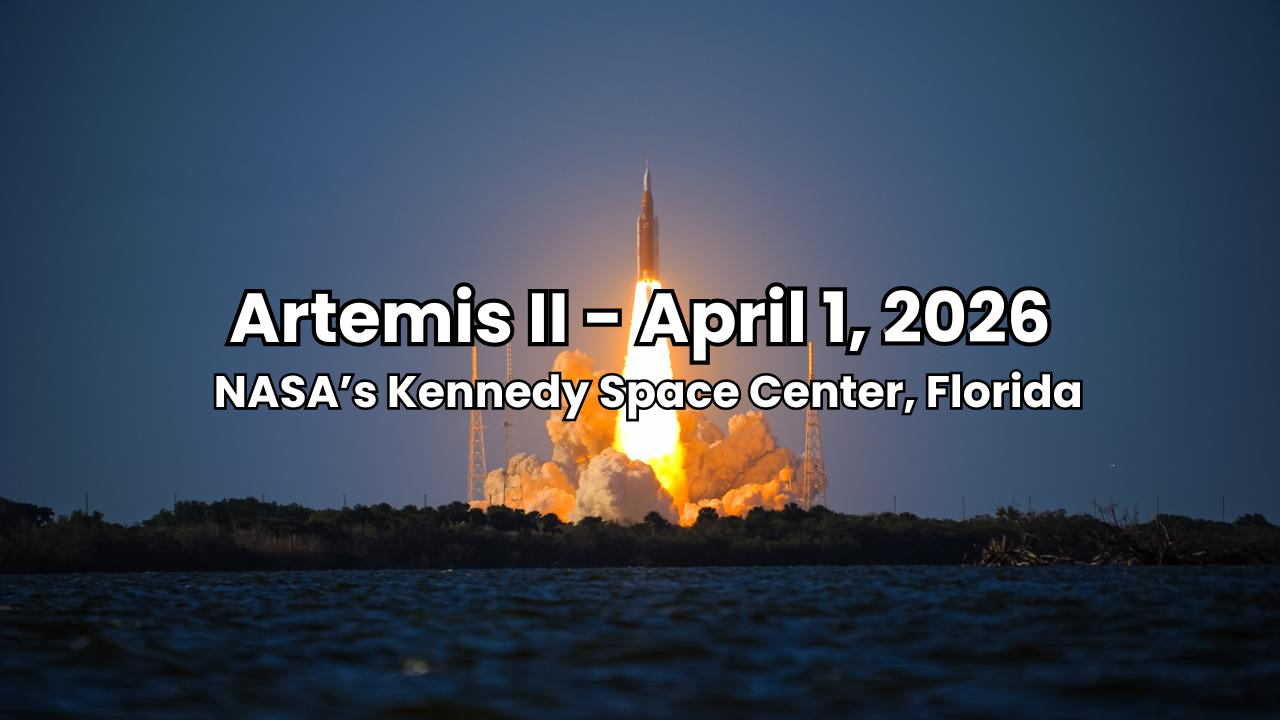
When Artemis II launched in April 2026, it did more than break a fifty-year drought of human travel beyond low-Earth orbit. It marked a historic pivot from short-term demonstrations of supremacy to the steady, repeatable work of establishing operational infrastructure on another world.
At STEM Search Group, we view this not just as a mission, but as an industrial catalyst. With an atomic physicist on staff and a materials science engineer as a co-founder, we see how these complex engineering tasks create ripple effects across every sector of the global talent market.
Reclaiming Continuity
The fifty-year hiatus between Apollo and Artemis was not a failure of technology, but of continuity. After Apollo, the U.S. lost the political and financial consistency required to stay in deep space. Programs like the Space Exploration Initiative (1989) and the Vision for Space Exploration (2004) were proposed and then canceled across successive administrations, causing specialized talent pipelines to dissolve.
Artemis II is different because it is built on a convergence of realities that did not exist during the Apollo era:
- Geopolitical Gravity: Space has returned as a strategic frontier. Direct competition with China’s International Lunar Research Station (ILRS) provides the political urgency needed to protect massive budgets.
- The Lunar “Gas Station”: The discovery of water ice in permanently shadowed regions changed the economics. Water can be electrolyzed into hydrogen and oxygen for rocket propellant, shifting operations from “disposable missions” to “sustainable infrastructure.”
- The “Gear Ratio” Reality: It takes roughly 8 kg of hardware and propellant to deliver just 1 kg of payload to the lunar surface. Producing fuel on-site (In-Situ Resource Utilization, or ISRU) is the only way to break this mathematical bottleneck.
The Deep Tech Frontiers Defining STEM Careers
The transition to a sustained lunar presence requires a massive leap in engineering. We are seeing intense demand in four key areas:
1. Advanced Energy: Fission Surface Power
Solar energy is insufficient for the 14-day lunar night. To solve this, NASA and the Department of Energy are developing Fission Surface Power systems, compact nuclear units generating between 40 kWe and 100 kWe. These systems utilize a Closed Brayton Cycle to provide continuous power independent of the environment.
2. Materials Science & Off-World Manufacturing
The unique physics of microgravity allow for the production of materials impossible to replicate on Earth. This includes ZBLAN fiber optics, which transmit light with dramatically less signal loss, and semiconductor crystals with fewer gravity-induced defects. Additionally, protecting astronauts from deep space radiation requires new carbon fiber composites stronger than steel at a fraction of the weight.
3. Edge Computing & The “Heat Wall”
Autonomous systems managing resource extraction need real-time compute to avoid signal delays from Earth. However, computing generates heat, and in a vacuum, convection is impossible. This makes thermal engineering and radiation-hardened semiconductor design as critical to the space economy as software development.
4. The Orbital Maintenance Economy
With a project of a million satellites in orbit, the risk of collision, and the resulting debris, is a primary constraint. This is creating a massive market for “tow trucks” and “gas stations” in space, driven by companies specializing in satellite refueling, debris removal, and autonomous trajectory prediction.
The Industrial Geography: A National Engine
The Artemis program is powered by a specialized “Aerospace Alley” that leverages the unique defense and manufacturing DNA of the entire country.
- California & Louisiana (The Bedrock): California houses over one-third of the nation’s space tech companies, generating $18.6 billion in output. Meanwhile, the Michoud Assembly Facility in New Orleans has manufactured nearly 90% of the SLS core stage.
- Florida & Texas (The Proving Grounds): Florida remains the premier multi-user spaceport for rapid launches, while Texas has become the epicenter for rapid hardware iteration and commercial lander development.
- Alabama & Mississippi (The Propulsion Hubs): Huntsville serves as the brain trust for heavy-lift systems, while the Stennis Space Center in Mississippi provides the essential flight-certification for every major propulsion stage.
- Georgia & Colorado (The Research Engines): Georgia Tech is pioneering water extraction techniques that could increase lunar water yield by 18.7%, while Colorado maintains the highest per-capita concentration of aerospace workers focusing on the digital “Orbital Cloud.”
The Talent Shift: A Shared Market
The space economy is no longer a silo; it is a convergence of industries.
- Thermal Engineers from data centers are solving heat rejection for lunar reactors.
- Nuclear Specialists from the energy sector are designing fission surface power.
- Materials Scientists from the semiconductor industry are pioneering microgravity manufacturing.
The Bottom Line: The nation or coalition that masters the physics of resource extraction and validates the automated operations of space nuclear power will command the norms and policies of the next century.
Artemis II is the spark. The sustained industrial demand for talent is the fire. At STEM Search Group, we are finding the people who build what comes next.
Sources
- https://www.govexec.com/management/2026/04/nasa-wants-build-base-moon-2030s-how-and-why-it-plans-get-there/412484/
- https://www.gao.gov/assets/d24107249.pdf
- https://en.wikipedia.org/wiki/Artemis_program
- https://www.york.ac.uk/media/satsu/documents-papers/Woods-2003-nasa.pdf
- https://www.zmescience.com/space/space-flight-space/nasa-is-finally-returning-to-the-moon-after-50-years-but-why-did-it-take-so-long/
- https://www.csis.org/analysis/artemis-and-economics-permanent-moonbase
- https://www.nasa.gov/history/55-years-ago-president-nixon-establishes-space-task-group-to-chart-post-apollo-plans/
- https://www.planetary.org/space-advocate/space-advocate-march-2026
- https://www.planetary.org/articles/three-charts-that-show-how-nasas-artemis-compares-to-apollo
- https://www.astronomy.com/science/why-nasa-is-targeting-the-moons-south-pole-for-artemis/
- https://ntrs.nasa.gov/api/citations/20240005576/downloads/ICES_2024_ISRU_final.pdf
- https://newspaceeconomy.ca/2026/04/01/chinas-shadow-over-artemis-is-the-moon-race-driving-sound-science-or-dangerous-nationalism/
- https://www.lockheedmartin.com/en-us/news/features/2026/fission-surface-power-endless-power-in-the-lunar-night.html
- https://www.energy.gov/ne/articles/5-things-you-need-know-about-fission-surface-power-systems
- https://www.nasa.gov/exploration-systems-development-mission-directorate/fission-surface-power/
- https://www.researchgate.net/publication/400211348_Artemis_Lunar_Architecture_A_Technical_and_Economic_Report
- https://news.stanford.edu/stories/2026/03/artemis-ii-material-technology-spacesuits-food
- https://en.wikipedia.org/wiki/Human_Landing_System
- https://en.wikipedia.org/wiki/Commercial_Lunar_Payload_Services
- https://www.gov.ca.gov/2026/04/01/californias-nation-leading-aerospace-industry-powers-nasas-historic-artemis-ii-mission/
- https://gnoinc.org/news/new-orleans-launches-the-united-states-back-to-space-with-nasas-artemis-moon-mission/
- https://medium.com/@karmanlineblog/space-law-in-the-coalition-era-artemis-accords-vs-ilrs-4f3ca320390a
- https://www.swfound.org/publications-and-reports/lunar-space-cooperation-initiatives
- https://innotechtoday.com/nasas-historic-artemis-ii-launch-paves-way-for-moon-exploration/
- https://spacenews.com/spacex-files-plans-for-million-satellite-orbital-data-center-constellation/
- https://leolabs.space/press/leolabs-achieves-record-bookings-in-2025/
- https://www.slingshot.space/news/slingshot-aerospace-awarded-27-million-space-force-contract-to-power-the-ai-driven-training-environment-for-space-warfare
- https://nvidianews.nvidia.com/news/space-computing
- https://www.astroscale.com/news/astroscale-selects-isar-aerospace-to-launch-elsa-m-in-orbit-demonstration
- https://www.adsadvance.co.uk/esa-and-clearspace-initiate-prelude.html
- https://www.northropgrumman.com/what-we-do/space/space-logistics-services/space-industrial-revolution
- https://www.orbitfab.com/news/rafti-preferred-standard/
- https://phys.org/news/2026-01-orbiting-factories-future.html
- https://www.viksnewsletter.com/p/why-make-optical-fibers-in-space
- https://www.nasa.gov/technology/nasa-supported-optical-fiber-manufacturing-arrives-at-space-station/
- https://aerospaceamerica.aiaa.org/analysis-the-space-manufacturing-market-doesnt-yet-exist-but-some-companies-say-it-will-soon/
- https://roboticsandautomationnews.com/2025/05/22/why-space-factories-may-be-the-next-industrial-frontier-and-whos-building-them/91112/
- https://www.aerospacetestinginternational.com/features/made-in-space.html
- https://www.nasa.gov/humans-in-space/commercial-space/nasa-selects-proposals-in-space-development-optical-fibers-stem-cells-enable-low-earth-orbit-leo-economy/
- https://www.factoriesinspace.com/zblan-and-exotic-fibers
- https://stemsearchgroup.com/houston-we-have-a-problem-space-is-getting-crowded-heres-whos-cleaning-it-up/
- https://www.swfound.org/publications