
Ozempic Was Just the Beginning
TL;DR FAQ: Is Ozempic Really Just a Weight Loss Drug?
▼ Q: What is GLP-1 and why does it matter?
A: GLP-1 (glucagon-like peptide-1) is a hormone your body naturally produces every time you eat. It triggers insulin release, slows digestion, and signals fullness to your brain. GLP-1 receptor agonist drugs like semaglutide (Ozempic, Wegovy) and tirzepatide (Mounjaro, Zepbound) mimic and amplify that signal. They don’t introduce something foreign. They strengthen a system your body already runs.
▼ Q: Is Ozempic a weight loss drug or a diabetes drug?
A: It started as a diabetes drug. Exenatide (Byetta), the first GLP-1 drug, was approved in 2005 strictly for blood sugar control. Weight loss was an unexpected side effect that researchers then followed deliberately. By 2021, Wegovy was FDA-approved specifically for obesity. Ozempic is still approved only for Type 2 diabetes. The confusion is understandable, but the two drugs serve different clinical indications, even though they share the same active ingredient.
▼ Q: Why are GLP-1 drugs being studied for heart disease, kidney disease, and sleep apnea if they started as diabetes drugs?
A: Because those conditions share the same upstream cause. Metabolic dysfunction, the kind driven by obesity, insulin resistance, and chronic inflammation, doesn’t just cause one disease. It creates risk across many conditions at once. GLP-1 drugs work closer to that shared root, which is why clinical trials keep finding benefits that look unrelated on the surface but aren’t. They’re moving the same lever that cardiovascular disease, chronic kidney disease, fatty liver (MASH/NASH), and sleep apnea all depend on.
▼ Q: What is the difference between Ozempic, Wegovy, Mounjaro, and Zepbound?
A: Ozempic and Wegovy both contain semaglutide, made by Novo Nordisk. Ozempic is FDA-approved for Type 2 diabetes; Wegovy is FDA-approved for obesity and uses a higher dose. Mounjaro and Zepbound both contain tirzepatide, made by Eli Lilly. Mounjaro is approved for Type 2 diabetes; Zepbound is approved for obesity. Tirzepatide is a dual agonist, meaning it targets two metabolic hormones (GLP-1 and GIP) instead of one, and early data shows greater weight loss than semaglutide alone.
▼ Q: What are the known risks and side effects of GLP-1 drugs?
A: The most common side effects are gastrointestinal: nausea, vomiting, diarrhea, and slowed gastric emptying. Gallbladder complications have been reported. There is a thyroid tumor warning on the label, based on animal studies. Most side effects are dose-dependent and manageable for most patients, but they are not trivial. Long-term safety data beyond 10-15 years in broad populations is still being developed.
▼ Q: Will people gain the weight back if they stop taking GLP-1 drugs?
A: In most cases, yes. Studies show that weight returns, often substantially, after stopping treatment. This raises an important question that remains unsettled: for many patients, these may function as lifetime medications rather than short-term interventions. How healthcare systems, insurers, and individuals navigate that reality is still being worked out.
▼ Q: Who can access GLP-1 drugs, and what does cost look like?
A: Cost is a significant barrier. List prices run over $1,000 per month before insurance, and coverage varies widely. The National Academy of Medicine has flagged access and equity as urgent public health concerns. The people who carry the highest burden of obesity-related disease are often the least likely to afford or access these drugs. Whether insurance systems commit to broad, sustained coverage remains one of the most consequential open questions around this drug class.
▼ Q: What other drugs or treatments might follow the same path as GLP-1?
A: Several are already in development. Triple agonists targeting a third metabolic hormone are in clinical pipelines, with early data suggesting even greater weight loss and metabolic benefit than current options. Amylin analogs are being studied for obesity and blood sugar regulation. Researchers are exploring GLP-1 combinations for non-alcoholic fatty liver disease (MASH/NASH), Alzheimer’s and cognitive decline, alcohol and substance dependence, inflammatory conditions, and polycystic ovary syndrome (PCOS). The common thread is metabolic dysfunction. As the science gets better at targeting that root cause earlier and more precisely, conditions that previously seemed unrelated to obesity or diabetes are showing up as candidates for this class of treatment.
Everyone’s heard of Ozempic.
Your neighbor takes it. A celebrity probably does too. It’s been on the cover of magazines, debated in Congress, and blamed, fairly or not, for everything from shrinking portion sizes at restaurants to a run on insulin supplies.
But here’s what most people don’t know: Ozempic isn’t really a weight loss drug. And the story it kicked off is far bigger than any of us realized.
Your Body Invented This First
Before there was Ozempic, there was a hormone your body has been making since birth.
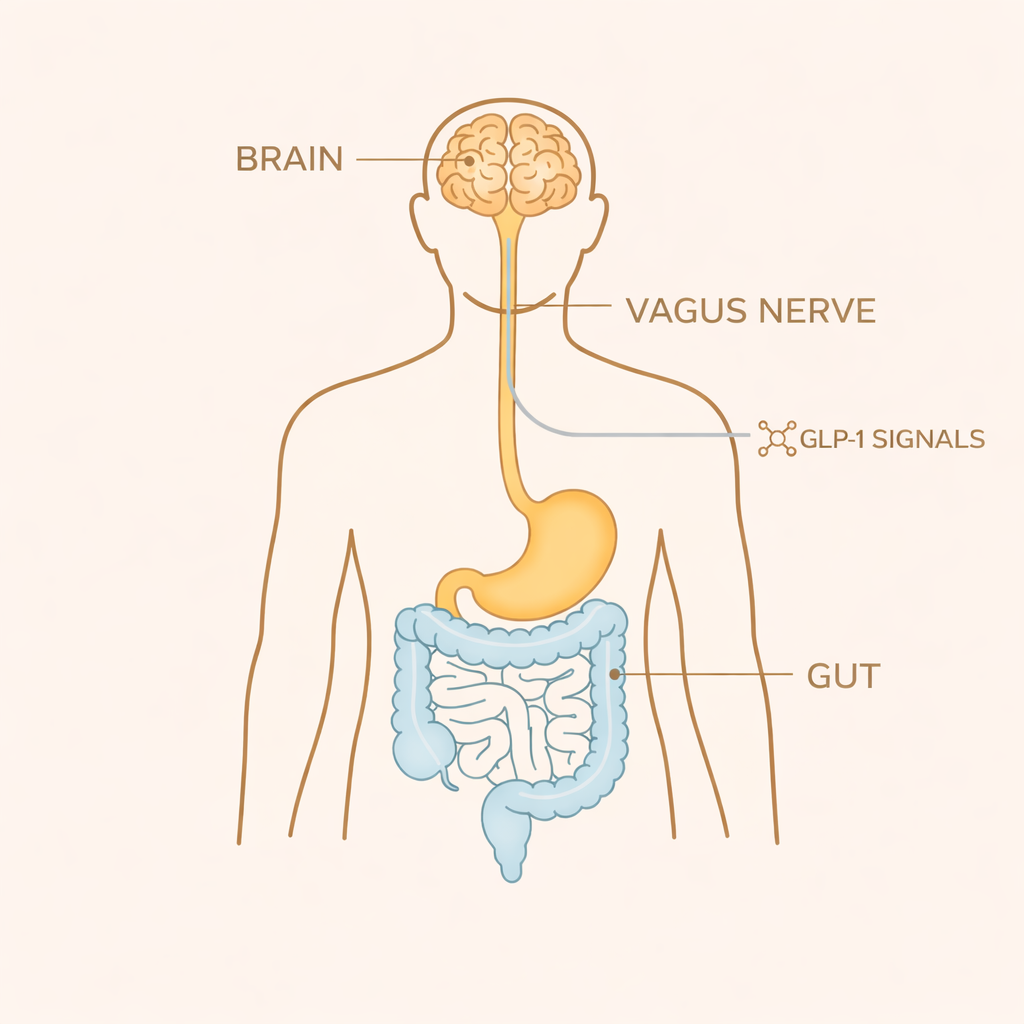
It’s called GLP-1 (glucagon-like peptide-1), and it’s released naturally from your gut every time you eat. It tells your pancreas to release insulin. It slows digestion. It signals your brain: you’re full, put the fork down. It’s been quietly running this process your entire life.
What scientists discovered is that they could build a drug to mimic and amplify that signal. Not introduce something foreign. Not hack the system. Strengthen something that already exists.
That distinction matters more than it might seem.
The Discovery Nobody Planned For
The first GLP-1 drug, exenatide (Byetta), was approved in 2005. The mission was modest: help people with Type 2 diabetes control their blood sugar. It worked.
But then doctors noticed something they didn’t expect.
Patients were losing weight.
Not a little. Meaningfully. Consistently. In ways no diabetes drug had produced before.
That wasn’t the goal. It was the clue.
Over the next fifteen years, researchers pulled on that thread. Higher doses. Longer-acting formulations. Better delivery mechanisms. The science kept pointing in the same direction. By 2021, Novo Nordisk received FDA approval for Wegovy, semaglutide reformulated and dosed specifically for obesity. Eli Lilly followed with Zepbound.
What started as a blood sugar management tool had, quietly and almost accidentally, become the most effective obesity treatment ever developed.
The brand names are everywhere now: Ozempic. Wegovy. Mounjaro. Zepbound. You’ve heard them at dinner parties, in your doctor’s office, on late-night TV. But calling them “weight loss drugs” is like calling the internet “a better fax machine.” Technically true. Profoundly incomplete.
One Hormone. A Dozen Diseases. Here’s Why.
This is the part that sounds like hype, but isn’t.
GLP-1 drugs are showing up in clinical trials for heart disease, kidney disease, liver disease, sleep apnea, and even early research into addiction and neurodegeneration. How does a diabetes drug have anything to do with all of that?
The answer is that these diseases aren’t as unrelated as they look.
Think of your metabolism not as a single system but as a master control panel for your body’s long-term health. When that panel goes wrong, when weight climbs, insulin resistance builds, and inflammation spreads, it doesn’t create one problem. It creates risk across dozens of downstream conditions at the same time.
Cardiovascular disease. Chronic kidney disease. Fatty liver (MASH/NASH). Sleep apnea. Type 2 diabetes. These conditions cluster together not by coincidence, but because they share the same upstream driver: metabolic dysfunction.
GLP-1 drugs work closer to the source. They’re not curing unrelated diseases. They’re moving the same lever that all of those diseases depend on.
The National Academy of Medicine has identified obesity as one of the single largest drivers of chronic disease burden in the United States. A drug class that meaningfully corrects metabolic dysregulation doesn’t just help one condition. It shifts the risk profile across the entire map.
This Isn’t a Drug. It’s a Platform.
Pharmaceutical history is full of blockbusters, drugs that sell billions and then get replaced. Platforms are different. A platform evolves. It spawns new versions. It gets combined with other mechanisms. It reaches new diseases.
GLP-1 is a platform.
Eli Lilly’s tirzepatide (Mounjaro, Zepbound) is already the next generation, a dual agonist that targets both GLP-1 and a second metabolic hormone called GIP. Early results show it outperforms semaglutide on weight loss. Triple agonists are already in development. Oral versions exist (Rybelsus). Research pipelines are pointing toward Alzheimer’s, alcohol dependence, and inflammatory conditions.
No company owns GLP-1 biology. That belongs to nature. But Novo Nordisk holds patents on semaglutide and Eli Lilly holds patents on tirzepatide, both running into the 2030s. Instead of licensing broadly, they compete through new indications, better formulations, and improved delivery. Both are spending billions on U.S. manufacturing expansion.
Not because they’re being generous. Because demand has outpaced supply, a problem that almost never happens in modern pharmaceuticals, and only happens when something genuinely works at scale.
What We Don’t Know Yet, And Should
Strong trial results are not the same as complete understanding. There are real gaps worth being honest about.
The side effects are real: nausea, vomiting, diarrhea, gallbladder complications, slowed gastric emptying. There’s a thyroid tumor warning on the label, based on rodent studies. Most side effects are gastrointestinal and dose-dependent, uncomfortable but manageable for most patients. Not trivial.
The deeper unknowns are harder:
- What does 20-30 years of continuous use look like? We don’t have that data yet.
- How much muscle mass is lost alongside fat during extended treatment? This is actively being studied.
- What happens when patients stop? Weight returns, often substantially, which raises the uncomfortable question: are these lifetime medications?
And then there are the questions that go beyond biology entirely. Who can actually access these drugs? At $1,000+ per month before insurance, the people who need them most are often the least likely to afford them. Will insurance systems commit to covering chronic metabolic disease at this scale, or will GLP-1 drugs become the most effective treatment that most of the world can’t reach?
The National Academy of Medicine has flagged equity and access as urgent public health considerations. This is not a footnote. It may be the defining challenge of the next decade.
The Bigger Picture
Medicine has historically played defense. Disease appears; we respond. We treat the heart attack after it happens. We manage the diabetes after it’s diagnosed. We prescribe the blood pressure medication after the numbers get bad.
GLP-1 drugs are part of a different idea: intervene upstream, before the cascade.
If metabolic dysfunction is the shared root of so much chronic disease, then drugs that correct metabolic function earlier, before cardiovascular disease, before kidney failure, before fatty liver becomes cirrhosis, represent a real shift in strategy.
We may be watching medicine move from treatment to regulation. From reactive to preventive. From managing late-stage damage to correcting the conditions that cause it.
GLP-1 may be the first drug class to attempt that shift at genuine global scale.
The keyword is attempt. The science is real. The molecules work. But the healthcare systems, the supply chains, the insurance frameworks, the equity structures, none of them were built for this. They’re all catching up in real time.
Ozempic was the headline. What comes next is the actual story.
So Why Is a Recruiting Firm Writing About This?
We work in biotech and pharma, so keeping up with the science is part of the job. But this one is also just personally relevant for a lot of people. If you haven’t taken one of these drugs yourself, there’s a good chance someone in your life has. And the conditions being studied now, heart disease, kidney disease, sleep apnea, fatty liver, go well beyond what most people picture when they hear “weight loss drug.” That felt worth putting out there.
And if you’re a biotech or pharma company expanding your team due to clinical trial pipelines, increased regulatory demands, or scaling manufacutring, you should expect your recruiting partners to be similarly passionate about what you’re doing, but also capable of tackling the most niche of roles. That’s us, that’s STEM Search Group!
Sources:
- https://my.clevelandclinic.org/health/treatments/13901-glp-1-agonists
- https://nam.edu/news-and-insights/understanding-glp-1-drugs
- https://www.forbes.com/health/l/best-weight-loss-medications-v1
- https://www.acc.org/latest-in-cardiology/articles/2023/11/08/20/14/sat-915am-select-aha-2023
- https://investor.lilly.com/news-releases/news-release-details/lillys-oral-glp-1-orforglipron-successful-third-phase-3-trial
- https://www.wsj.com/health/pharma/eli-lillys-zepbound-gets-fda-ok-for-multi-dose-pen-626350cb
- https://www.drugpatentwatch.com/p/tradename/OZEMPIC
- https://legalclarity.org/mounjaro-patent-expiration-and-market-exclusivity/?utm_source=chatgpt.com
- https://www.asahq.org/about-asa/newsroom/news-releases/2024/10/new-multi-society-glp-1-guidance
- https://www.fiercepharma.com/pharma/novo-nordisks-ozempic-gets-label-warning-intestinal-blockage-disorder
- https://jamanetwork.com/journals/jamainternalmedicine/fullarticle/2790392
- https://www.accessdata.fda.gov/drugsatfda_docs/label/2023/209637s020s021lbl.pdf
- https://www.wsgr.com/en/insights/fda-sends-warning-letters-to-more-than-50-glp-1-compounders-and-manufacturers.html
- https://www.fda.gov/drugs/drug-safety-and-availability/fda-requests-removal-suicidal-behavior-and-ideation-warning-glucagon-peptide-1-receptor-agonist-glp
- https://www.thelancet.com/journals/lancet/article/PIIS0140-6736%2825%2901375-3/fulltext